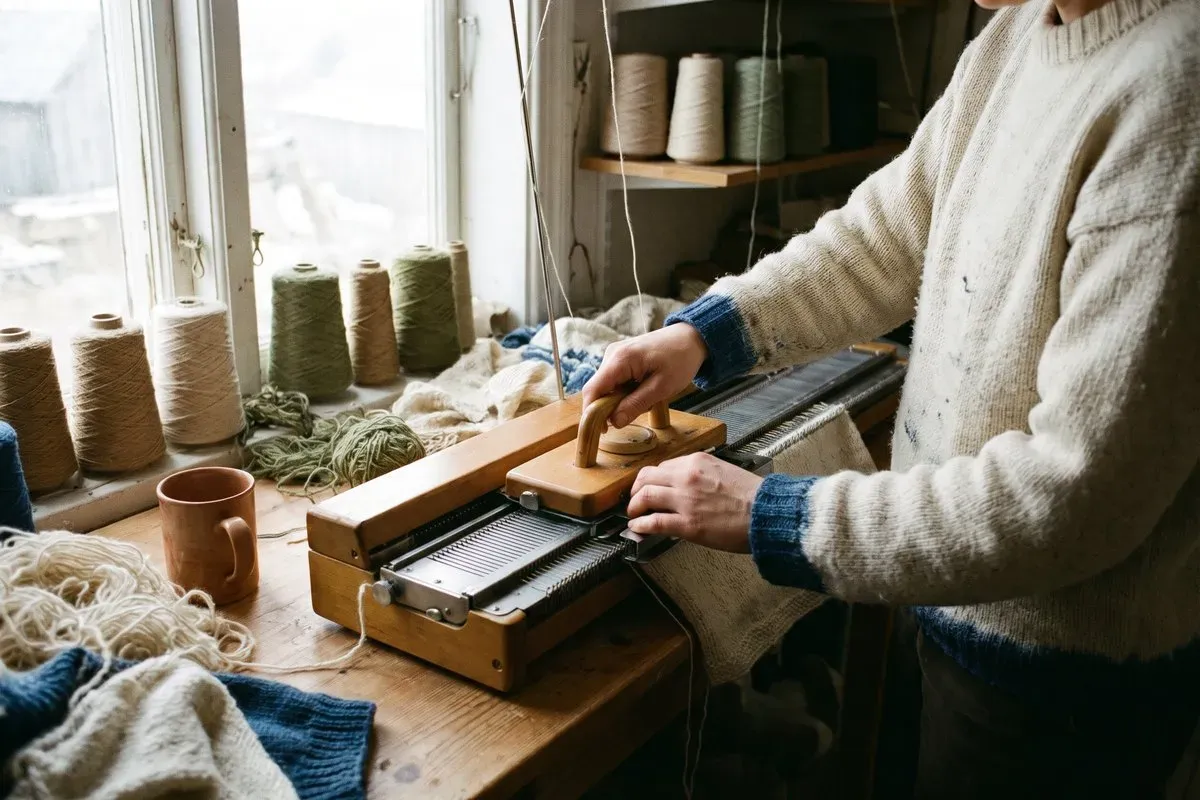
Our knitwear is made in a small workroom in Calderdale, in a stone building a few miles from the mill. The room holds a handful of hand-flat knitting machines, a linking table, a washer and a long table where finished pieces are checked and folded.
Yarn from Yorkshire
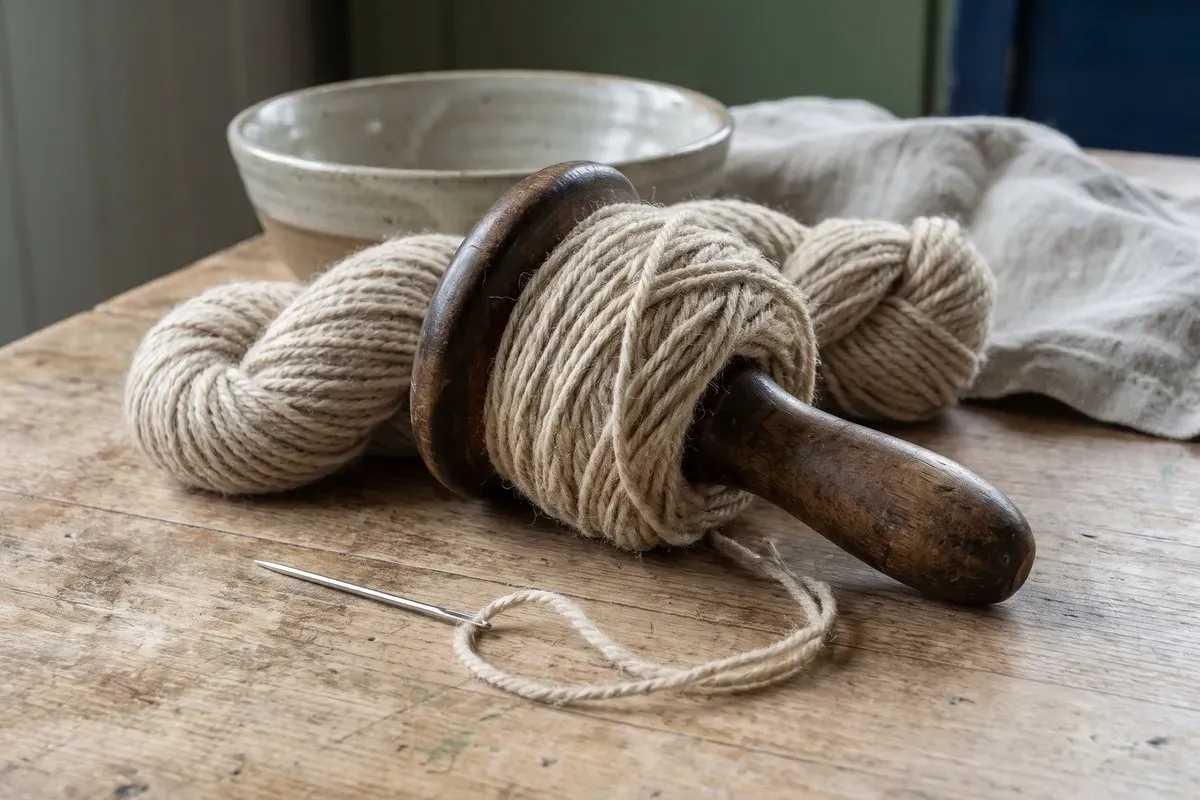
The lambswool and merino arrive as cones of yarn spun in Yorkshire. Each cone is checked against the colour standard before it goes on the machine, because a slight difference in shade shows up once the panels are linked together. The count of the yarn, its thickness, is chosen to suit each style, and the knitter checks the tension on a sample panel before the batch begins.
Most of our knits are plain stitches: a crew, a roll neck, a tank. Plain knitting shows every uneven stitch, so the machine is run slowly and the first panel of each batch is checked by hand.
Knitted in panels
The machines knit flat panels, a front, a back and two sleeves, rather than whole garments in one piece. The panels are washed and rested, then linked at the shoulders, sides and armholes. Linking is done stitch for stitch, which gives a flat seam that does not rub.
Collars and cuffs are knitted separately and attached by hand. The knitter turns each piece inside out, checks the seams and clips the loose ends before it goes to be washed and pressed.
Finished by hand
Every piece is measured flat against the size chart, then pressed under a damp cloth. The workroom packs the knits in paper and sends them to the mill, where they join the linen and cotton in the shop.
The workroom is small on purpose. It can make a few hundred pieces a season, no more, and the knitter who starts a panel usually finishes it. That pace is slower than a large factory, but it lets us keep the wool pieces in production for years rather than one season, and it makes them straightforward to repair. If a piece is not right, it goes back to the machine or the linking table rather than into the shop. A small workroom can also keep the same patterns for years, which makes repairs easier.