Every linen shirt begins in a field. Flax is grown for its fibre, not its flower, and the best of it comes from a band of land in northern Europe where the summers are cool and damp. The plant grows tall and thin, then it is pulled rather than cut so the full length of the stem comes up. Harvest comes when the lower leaves have fallen and the stems have turned yellow, usually in July or August.
Retting
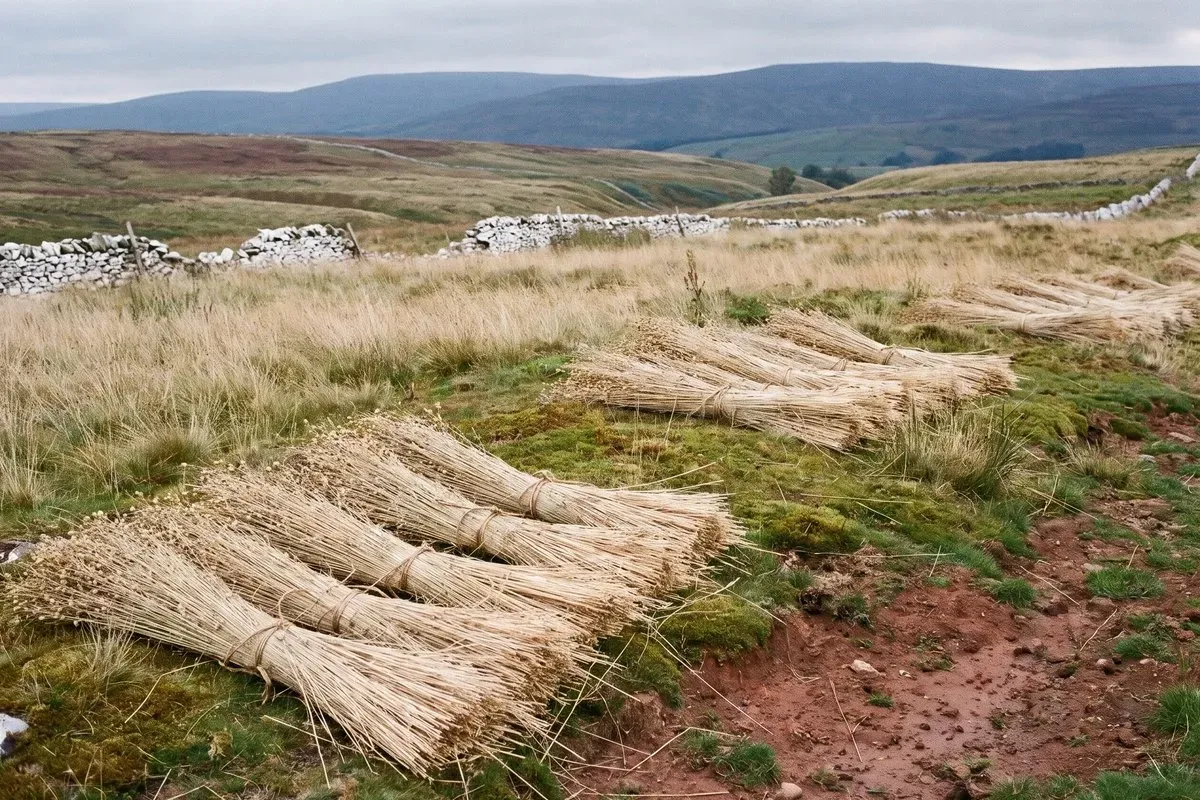
The fibre does not come away from the stem on its own. After harvest the flax is left in the field in loose stooks, or laid in shallow water, so that dew, rain and naturally occurring bacteria break down the pectins that hold the fibres to the woody core.
This is called retting. It takes days or weeks depending on the weather, and the grower watches it closely. Too little and the fibre stays stuck to the stem. Too much and the fibre itself begins to weaken.
Scutching
Once the stalks are dry, they are broken and beaten. A machine passes the stems between rollers to crack the woody core, then beats the broken pieces away. The long fibre that remains is called line flax. The shorter fibre, called tow, is used for coarser cloth and for twine.
The line fibre is then hackled, pulled through a series of sharp combs that remove the last of the debris and lay the fibres parallel. The combs get finer as the fibre is drawn through, and the short fibres that come away are kept for tow.
Spinning and weaving
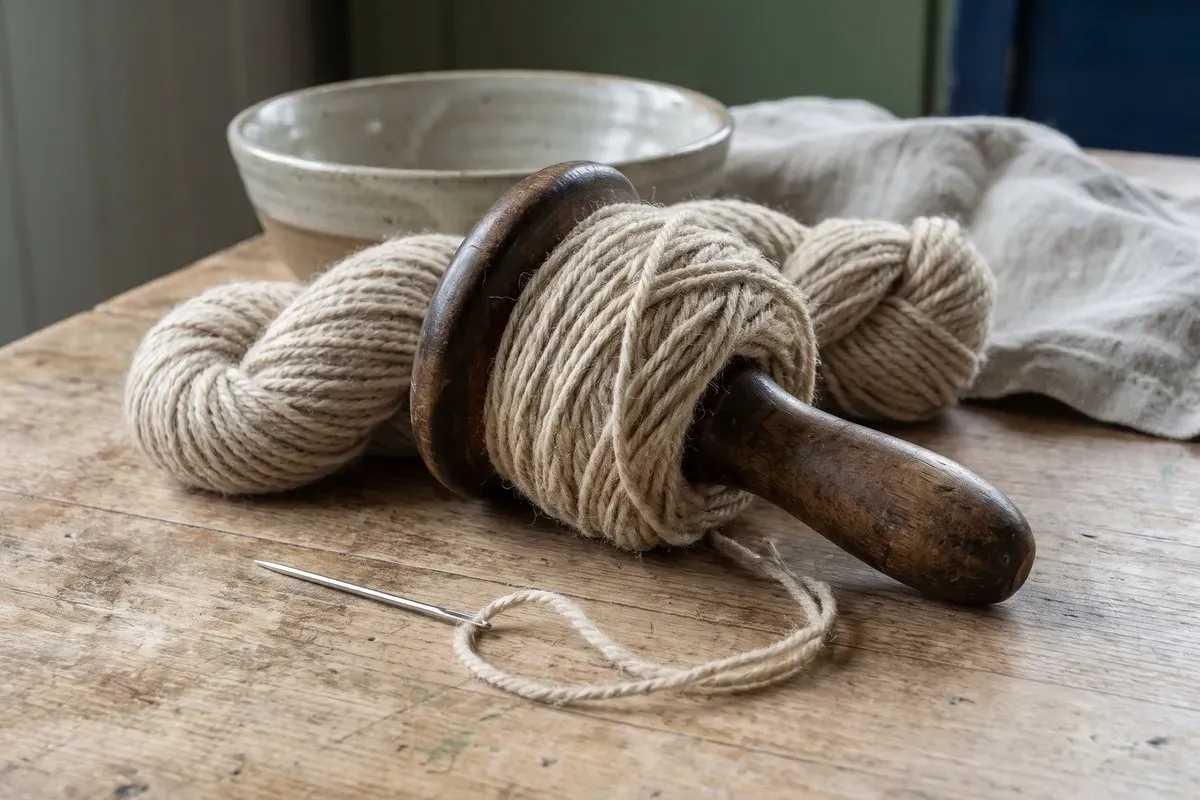
Spinning draws the combed fibre into a continuous yarn. Linen is spun damp in many mills, because moisture keeps the short fibres together and gives a smoother thread. A tightly spun yarn gives a smooth cloth, while a looser spin leaves more of the fibre's natural texture. The yarn is then wound onto beams and woven on a loom.
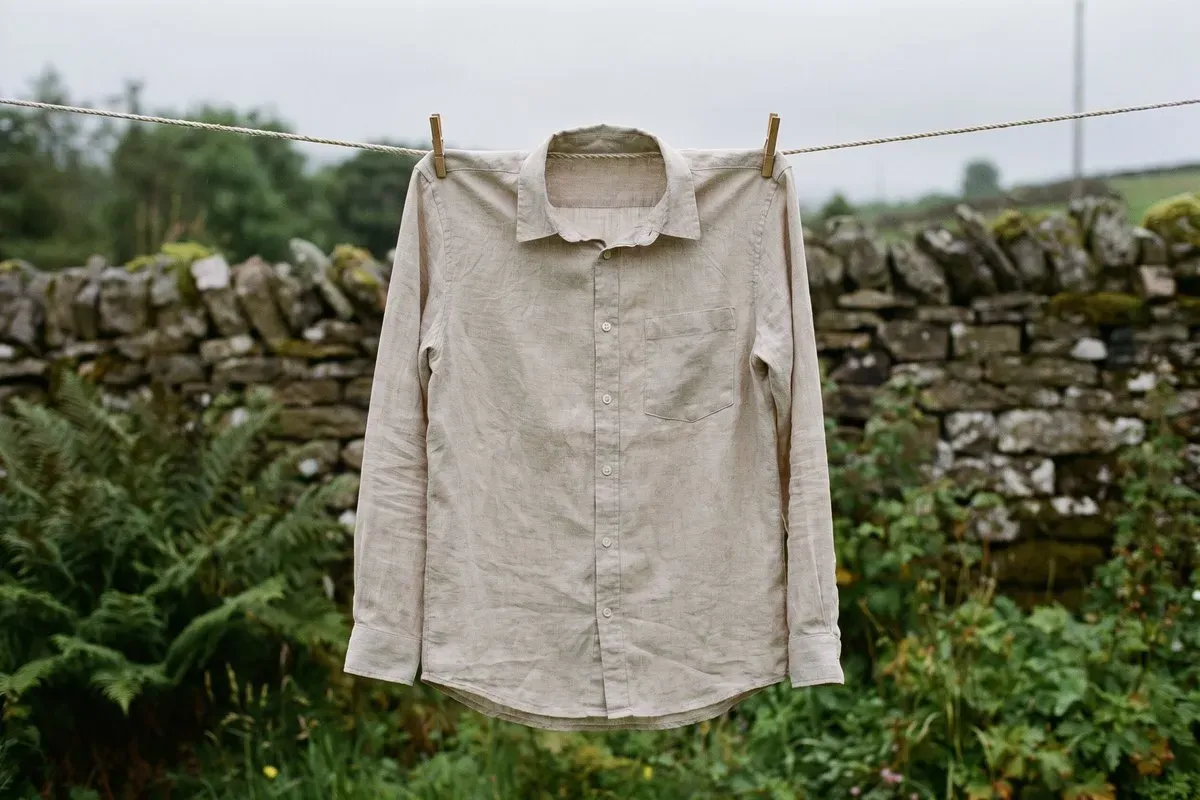
Our linen is woven in County Down. The cloth comes off the loom in its natural grey-beige state, called loomstate, and is washed and finished before it is cut. Nothing is wasted: the tow becomes twine, the shives become board, and the cloth that is left over becomes tote bags and mending kits.