Linen is a plain cloth and it asks for plain treatment. A cool wash, a line in the air and very little else will keep a shirt or a dress in use for years. The cloth is strong when it is wet, so you do not need to handle it like wool.
Wash at 30 degrees
Use a gentle or linen cycle at 30 degrees and a small amount of ordinary detergent. Do not use bleach or fabric softener. Softener coats the fibre and works against the way linen softens on its own.
Wash linen with similar colours and leave plenty of room in the drum. A crowded machine creases the cloth and can pull at seams. For a single shirt, a short wash is enough. Turn the piece inside out and close any buttons so the front does not catch on the drum. Treat a stain before washing with a little cool water and detergent, and avoid rubbing hard, which can lift the colour.
New linen can shed a little fibre in the first few washes. This is normal and settles down.
Dry on the line
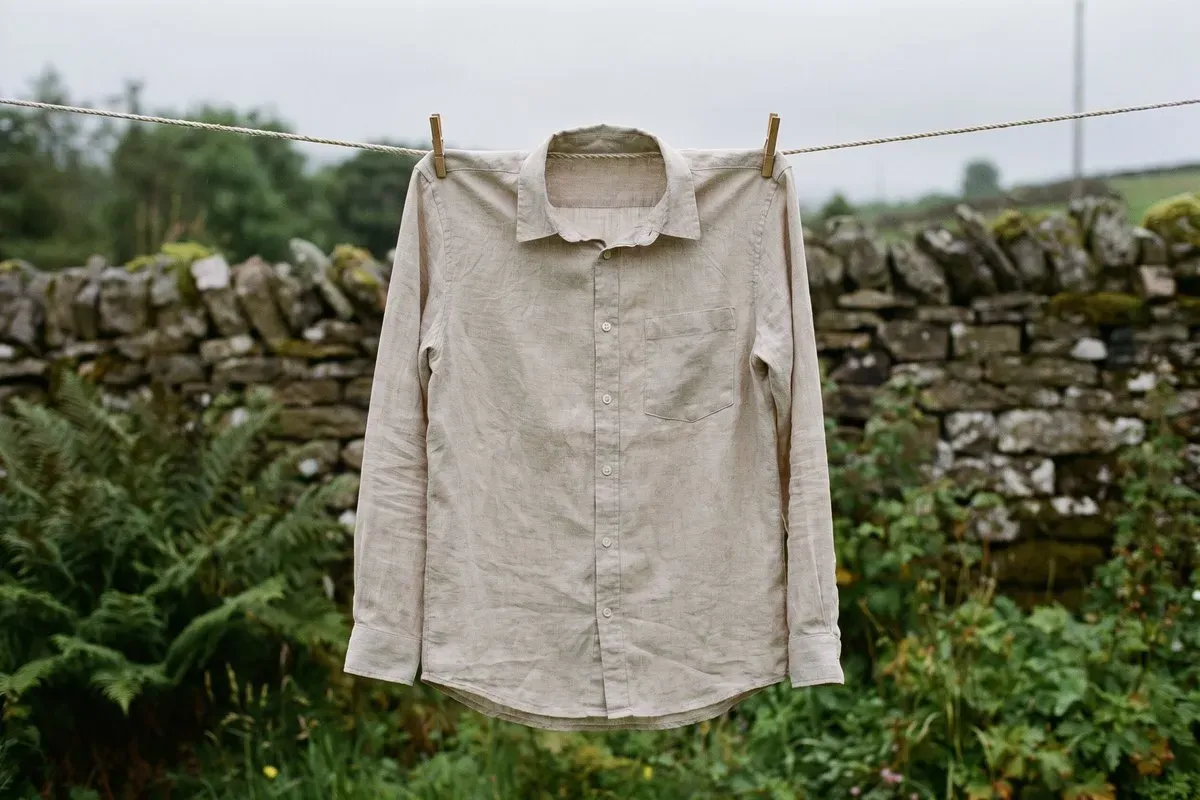
Shake the piece out as soon as the wash ends and hang it on a line or a wooden hanger. Air moving through the cloth is better than a tumble dryer, which uses more energy and breaks down the fibre faster. Hang shirts from the shoulders and trousers from the waistband, so the weight of the wet cloth pulls out the worst of the creases.
Dry linen in the shade if you can. Strong sun will fade an indigo or a clay dye over time. On a wet day, a warm airing cupboard is a better choice than a hot radiator.
Iron damp, or not at all
Linen creases as it dries, and most of us prefer it that way. If you want a crisper finish, iron the piece while it is still damp, on a medium heat, with the iron moving steadily. Press collars, cuffs and hems first.
Every wash relaxes the fibre a little more. That is why an old linen shirt feels softer than a new one, and why the creases become part of the cloth rather than a fault in it.